

Finished Top
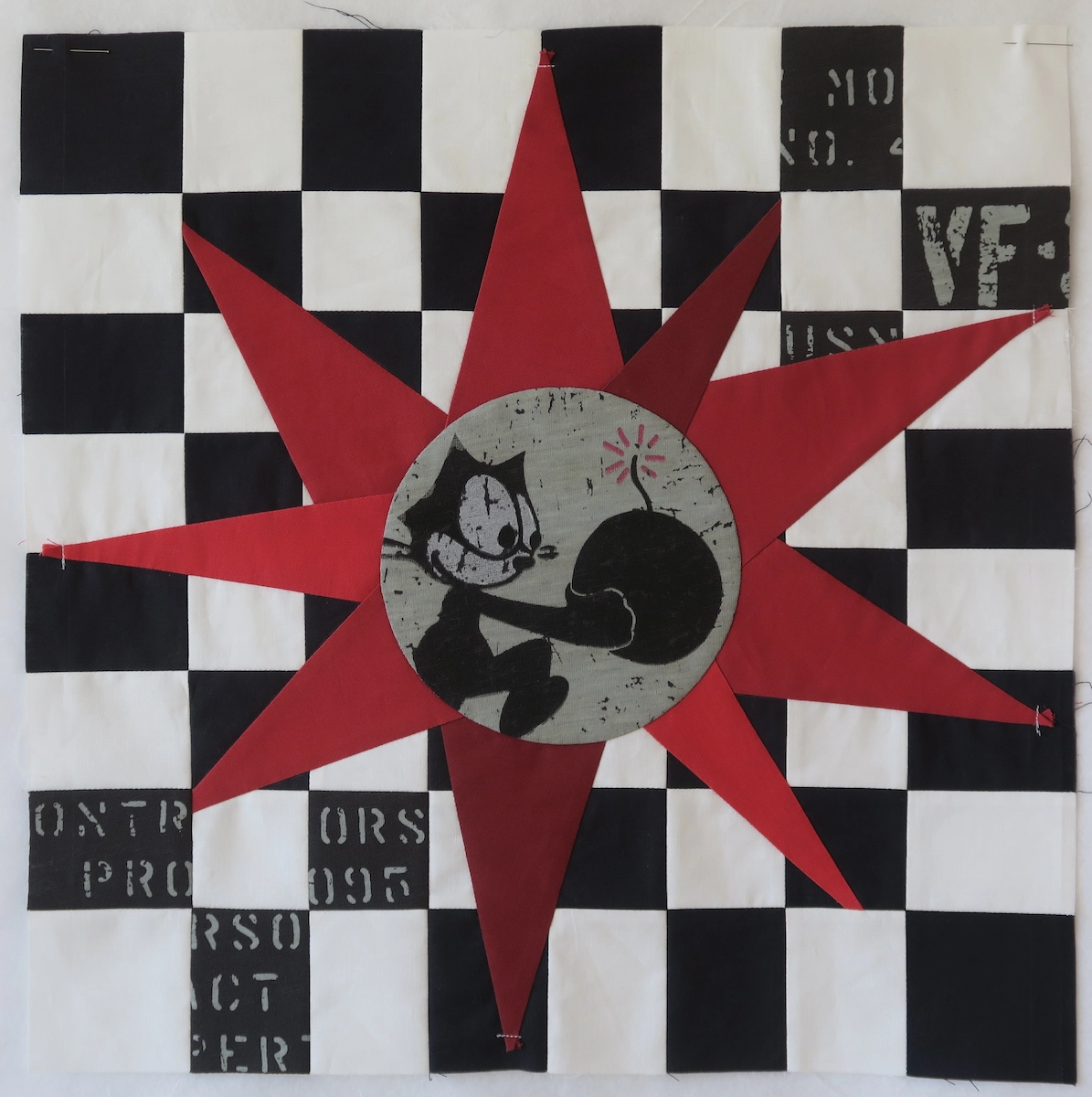
As mentioned in previous posts, I have been working on a series of small quilts based on upcycled T-shirts for a few weeks. I hesitated quite a lot before starting this fourth piece as it is the trickiest to make so far. The quilt top is now finished and deserved a dedicated blog post …
Comme déjà mentionné dans des articles précédents, je travaille depuis quelques semaines sur une série de petits formats basés sur des T-shirts recyclés. J’ai pas mal hésité à me lancer dans cette quatrième pièce car c’est jusqu’à maintenant la plus compliquée de la série à réaliser. Le top est maintenant terminé et mérite un article de blog dédié …

Inspiration
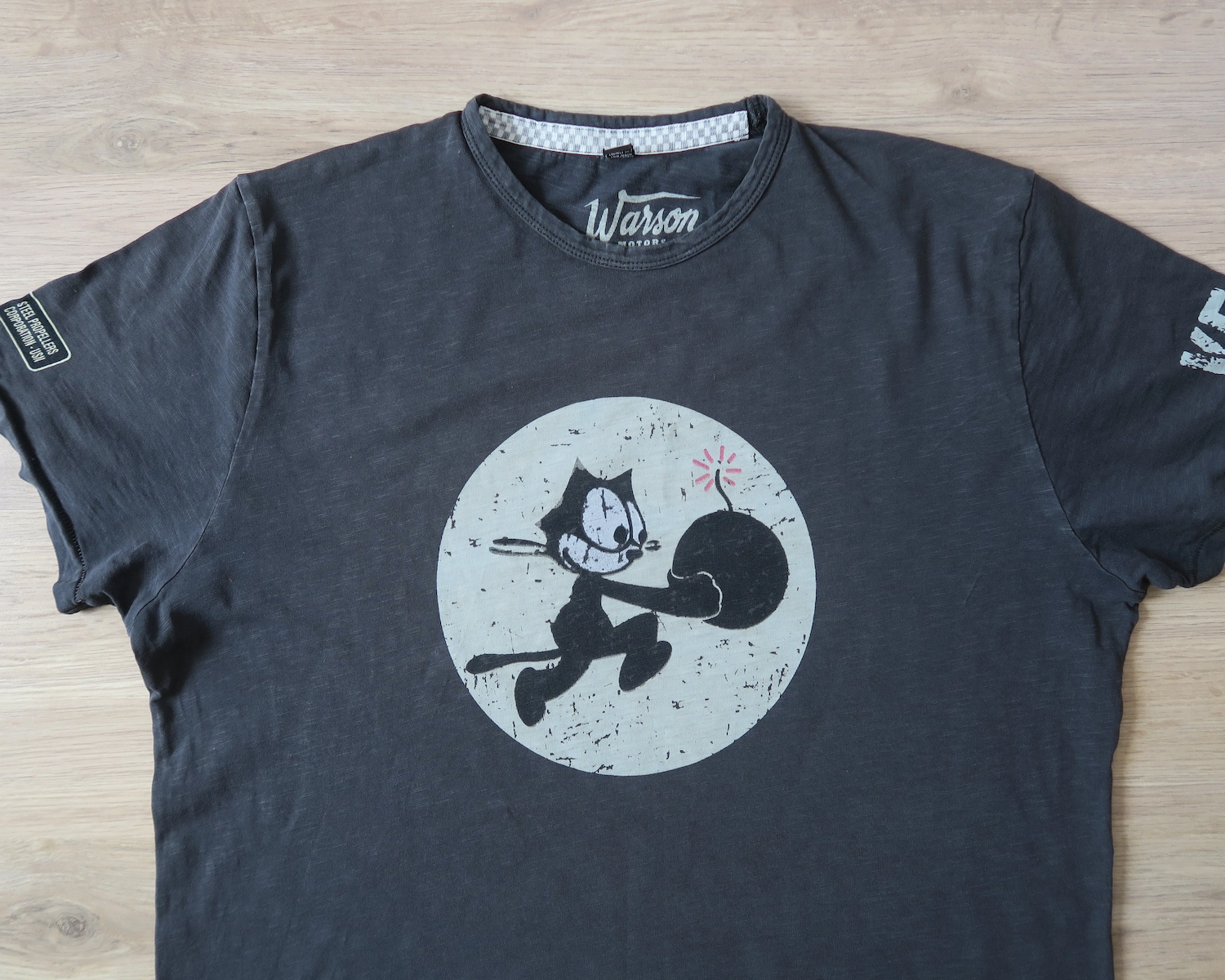
Like for the other pieces of this series, I used the print of the T-shirt as a starting point to design the quilt. The bomb pattern lead me towards images of explosions depicted in comics and Pop Art.
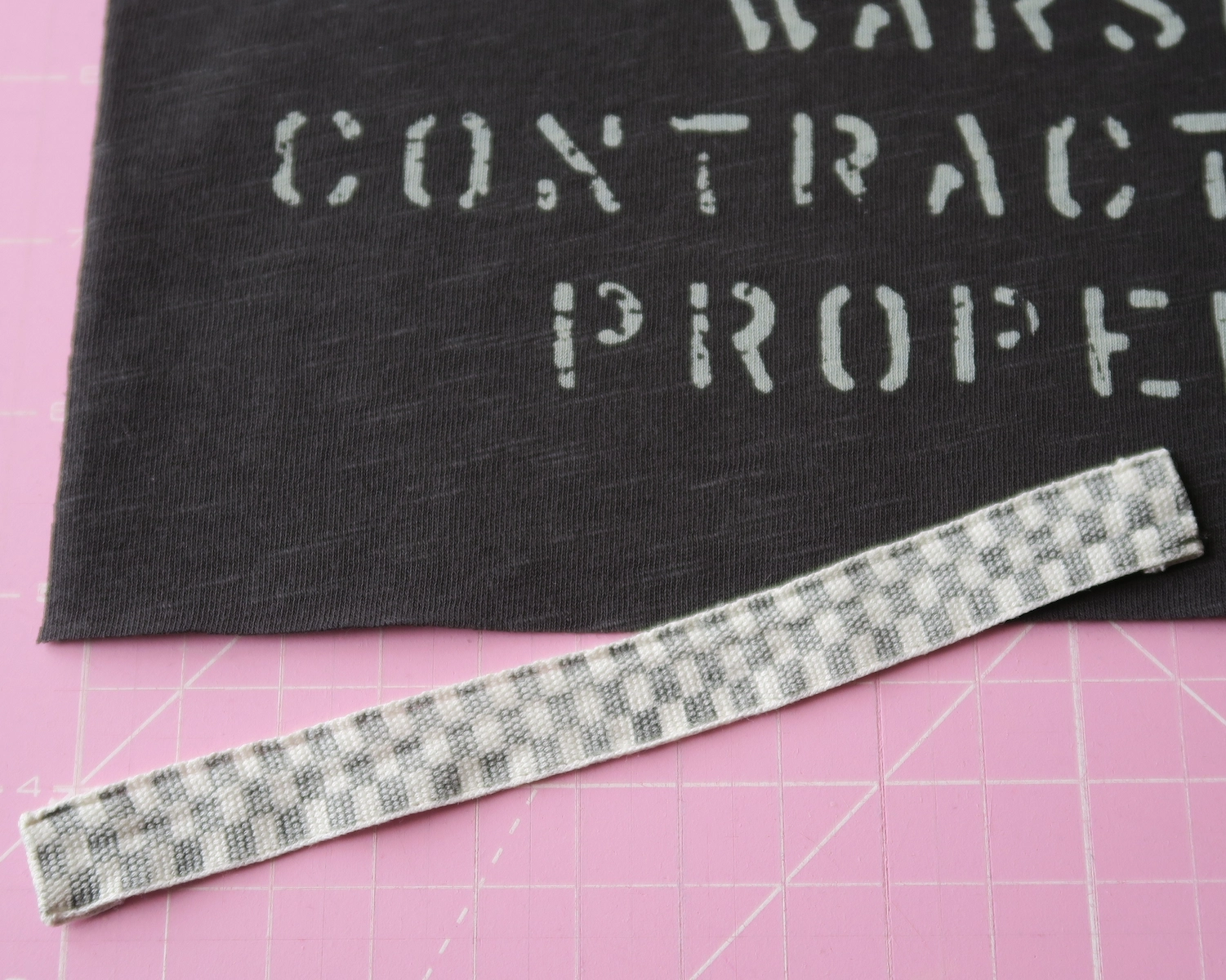
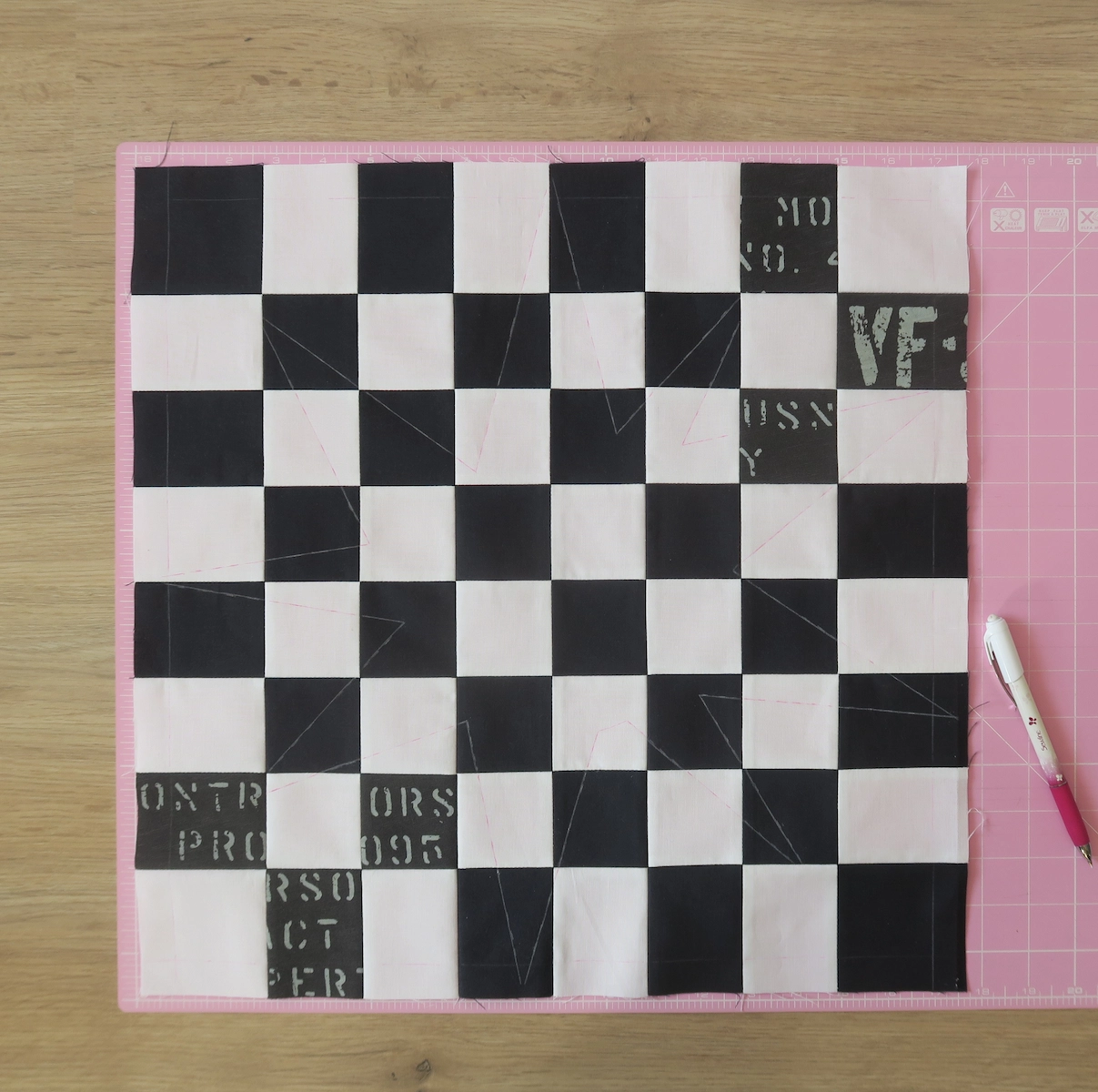
The checkerboard pattern of the ribbon, which was sewn on the collar, inspired me the checkerboard style background. The printed text you can see on the picture was printed on the back of the T-shirt.
Comme pour les autres pièces de cette série, j’ai utilisé l’imprimé du T-shirt comme point de départ pour le design du quilt. Le motif de bombe m’a conduit vers des images d’explosion dépeintes dans les bandes dessinées et le Pop Art.
Le motif de damier du ruban, qui était cousu sur le col, m’a inspiré le fond de style damier. Le texte imprimé que vous pouvez voir sur la photo était imprimé au dos du T-shirt.
Interfacing
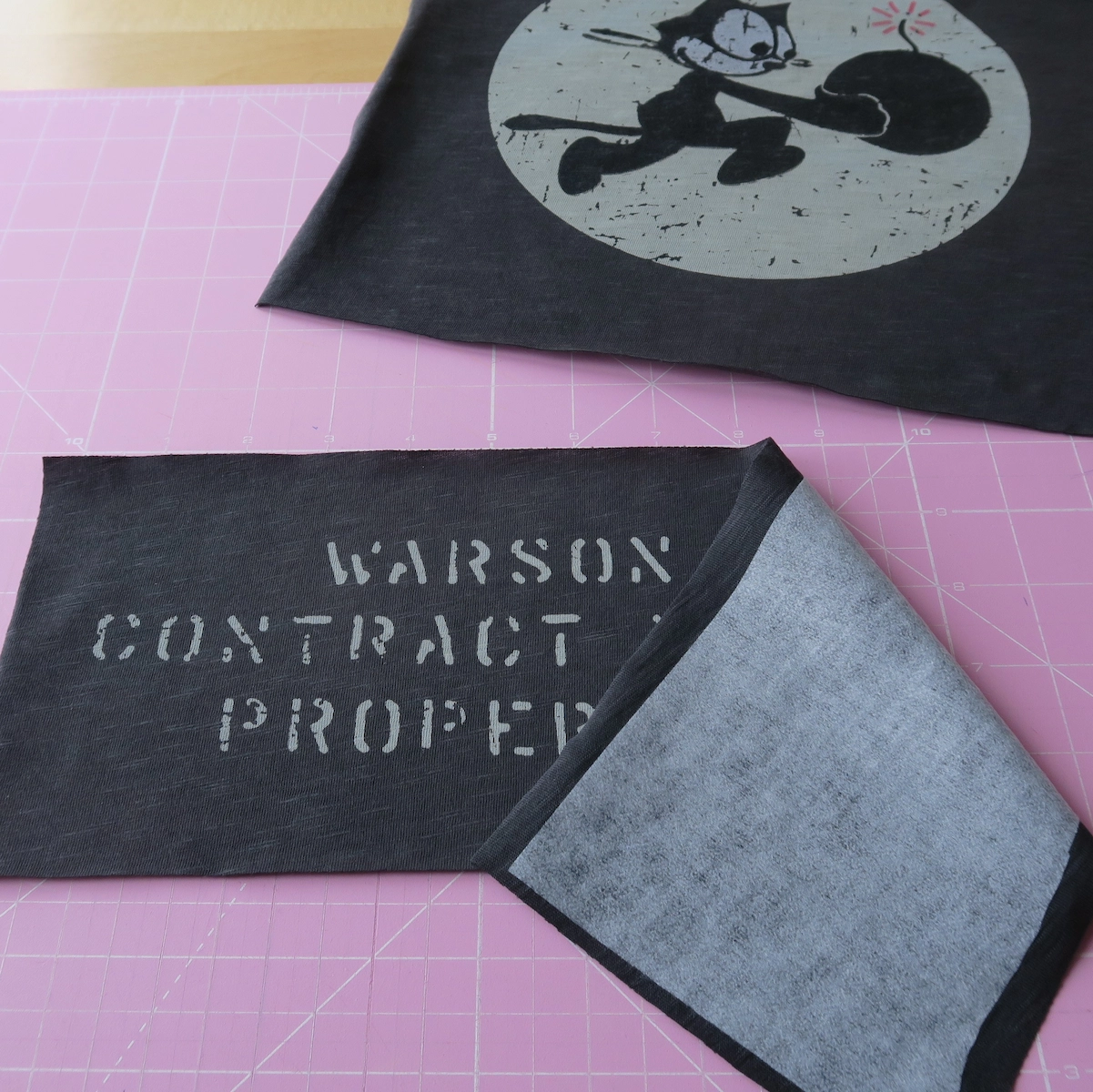
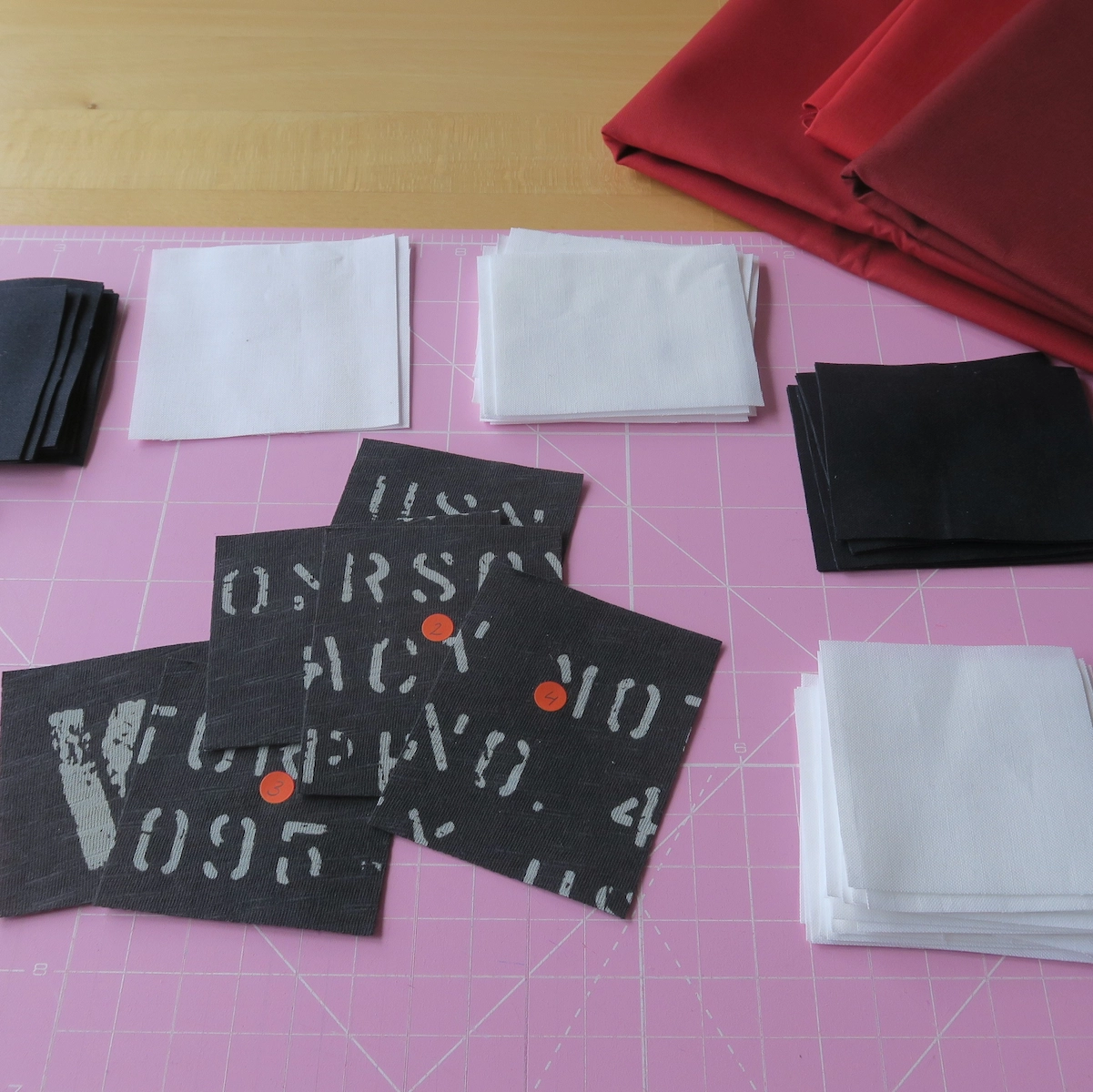
I fused interfacing to the wrong side of the prints to stabilize the fabric and allow for accurate piecing.
As I had this series in mind for a while, I bought a piece of intefacing recommended by Latifah Saafir for T-shirt quilts while at Quiltcon last February. From this example, I looked for a similar product available in Switzerland and went for Vliesline H180.
J’ai collé un entoilage au dos des imprimés pour stabiliser le tissu et permettre un assemblage précis.
Comme j’avais cette série à l’esprit depuis un certain temps, j’ai acheté en février dernier à Quiltcon un bout d’entoilage recommandé par Latifah Saafir pour les T-shirt quilts. A partir de cet exemple, j’ai recherché un produit similaire disponible en Suisse et opté pour le Vliesline H180.
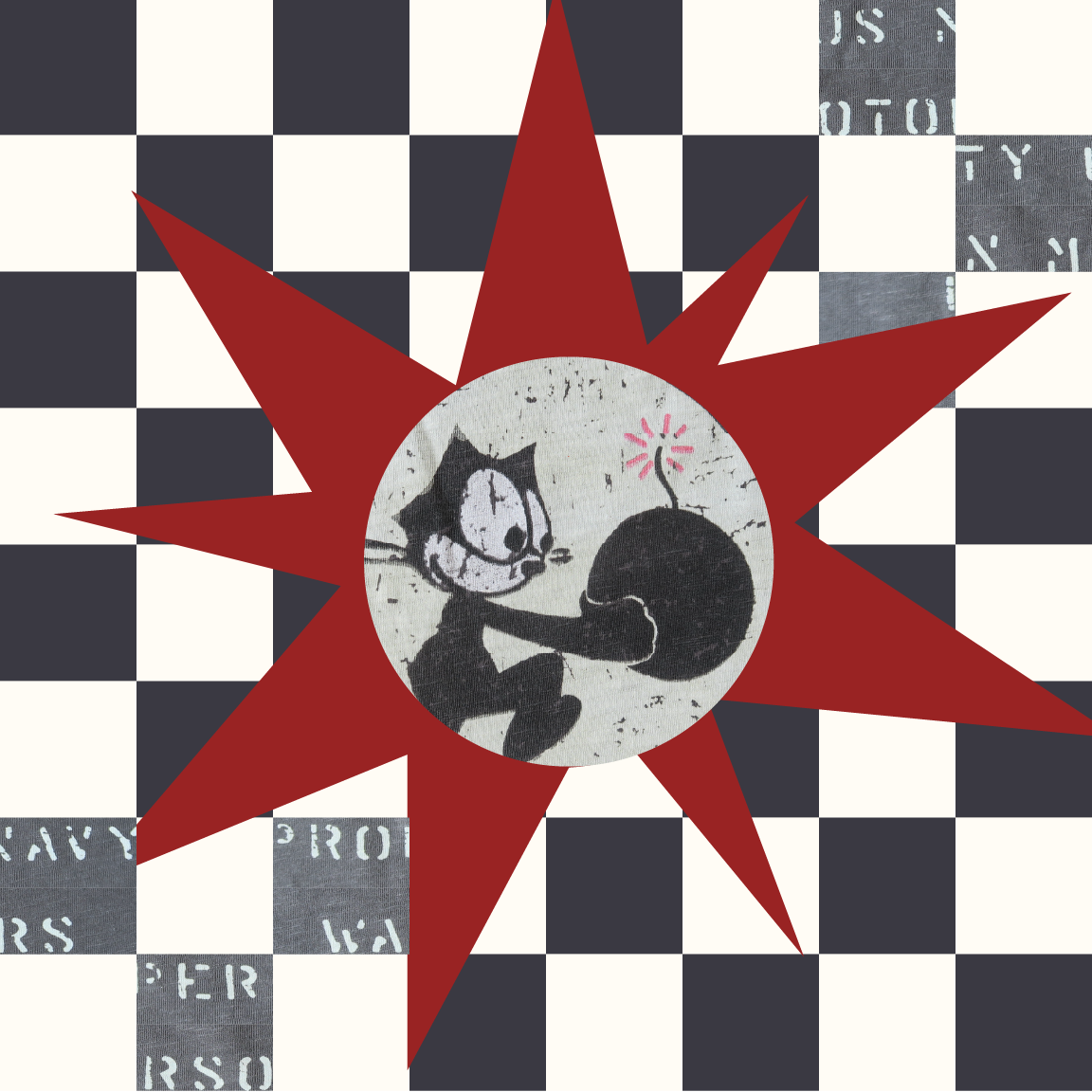
Mockup
I came pretty quickly with an idea for this project and designed it on Illustrator in the aftermath. As I didn’t know how to turn it into fabric, I then spent time modifying the design to make the sewing process easier. But I kept coming back to my initial idea again and again …
Je suis arrivée assez rapidement à une idée pour ce projet et l’ai dessiné sur Illustrator dans la foulée. Comme je ne savais pas comment le transformer en tissu, j’ai ensuite passé du temps à le modifier pour rendre le processus de réalisation plus simple. Mais je revenais encore et encore à mon idée initiale …
Piecing Option
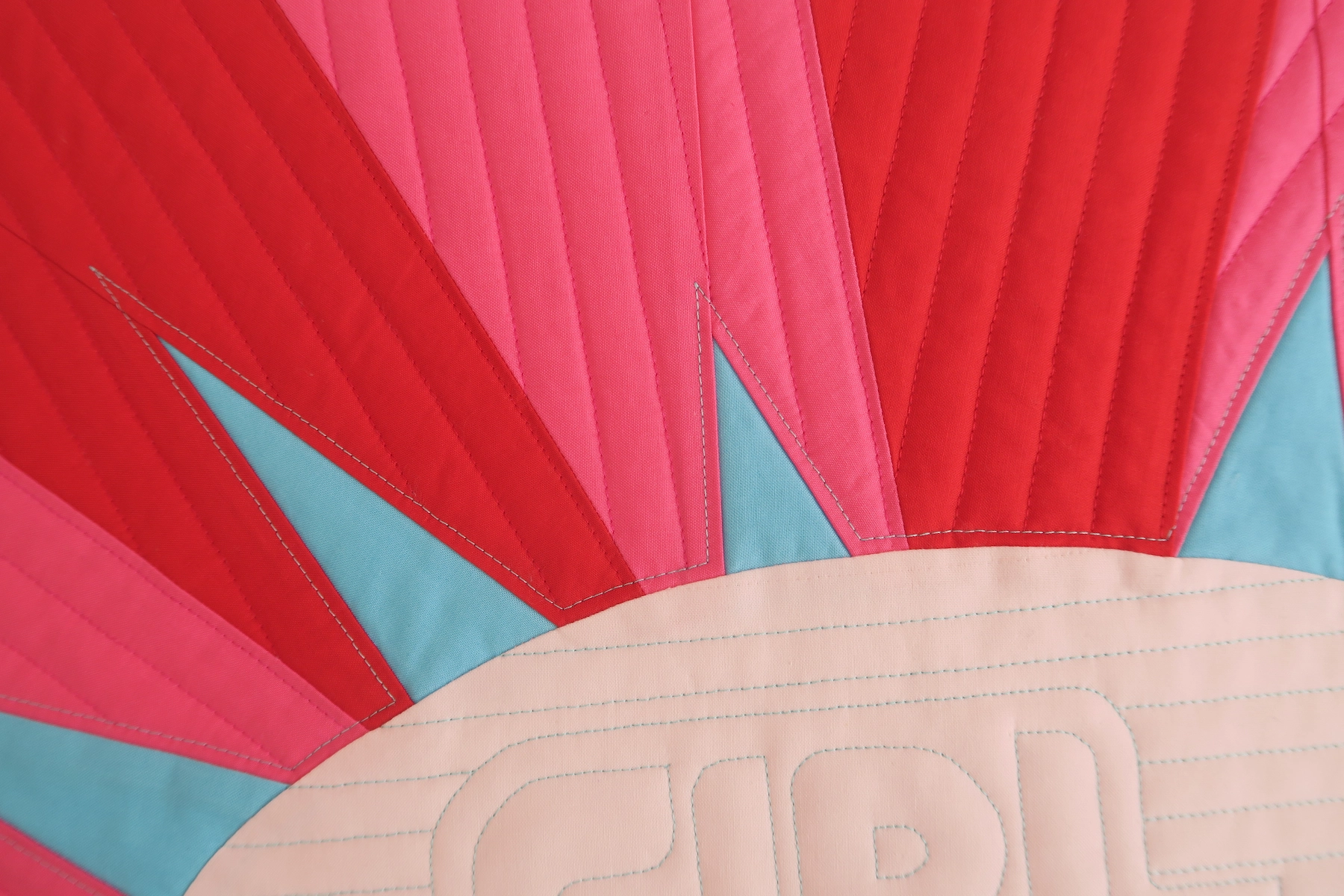
A foundation paper piecing technique would have been perfect to make the red points had I not chosen a checkerboard pattern for the background … I went for this option when I made my Girl Power quilt a few years ago.
La technique de couture sur support papier aurait été parfaite pour réaliser les pointes rouges si je n’avais pas choisi un motif damier pour le fond … J’avais pris cette option quand j’ai réalisé mon quilt Girl Power il y a quelques années.
Background
I finally chose to applique the points onto a pieced checkerboard pattern.
J’ai finalement choisi d’appliquer les pointes sur un motif de damier assemblé.
Appliqué Pieces
In my design, the red surface consists of multiple triangles, placed to form the explosion shape. I reused this idea while making it into fabric.
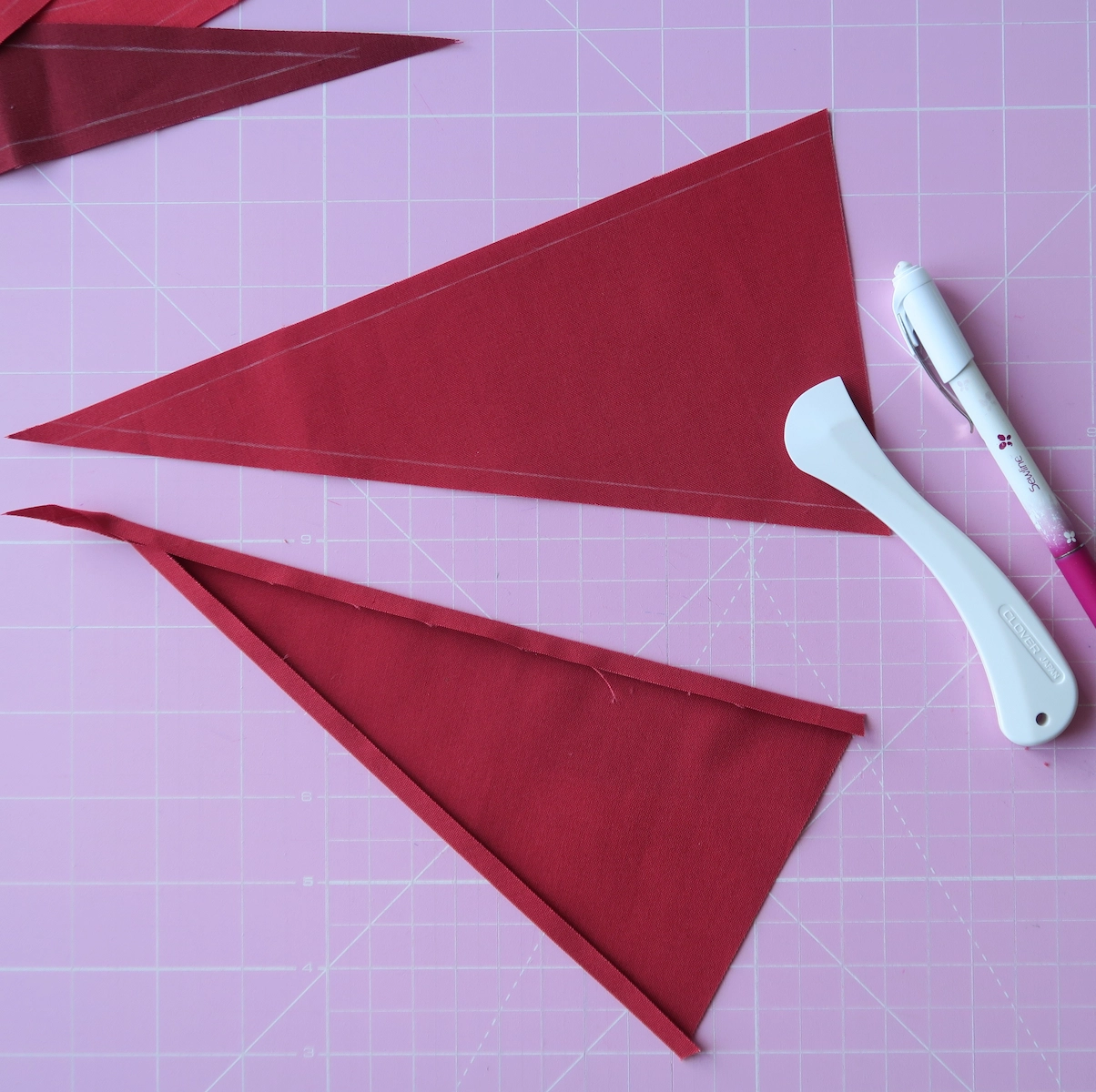
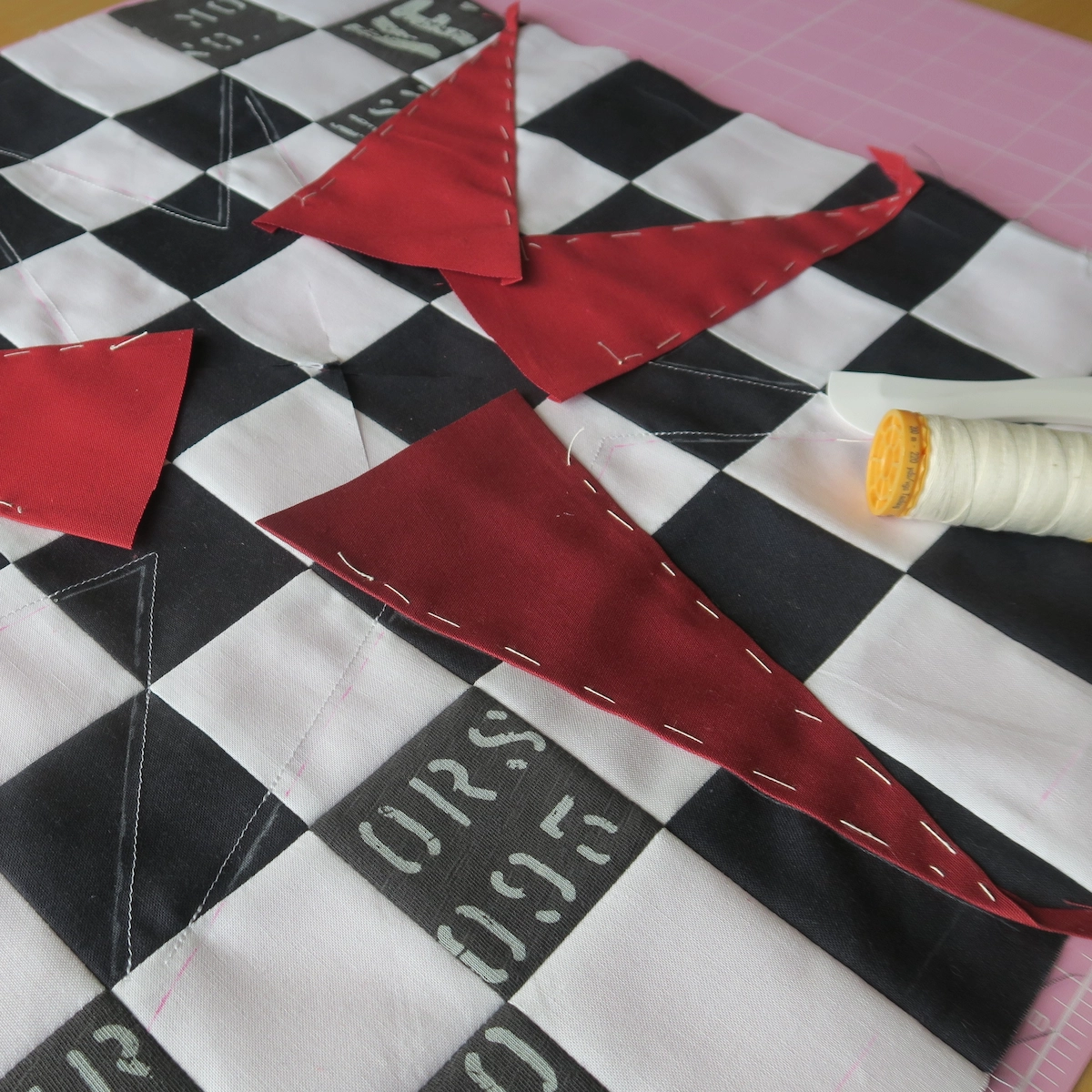
I used my Hera Marker tool and my iron to mark a crease at a quarter inch from the edge for the seam allowance. I then positioned and basted the triangles on the background.
Sur mon dessin, la surface rouge est constituée de plusieurs triangles, placé pour créer une forme d’explosion. J’ai réutilisé cette idée pour la réaliser en tissu.
J’ai utilisé mon outil Hera Marker et mon fer pour marquer un pli à un quart d’inch du bord pour la marge de couture. J’ai ensuite positionné et faufilé les triangles sur le fond.
Points
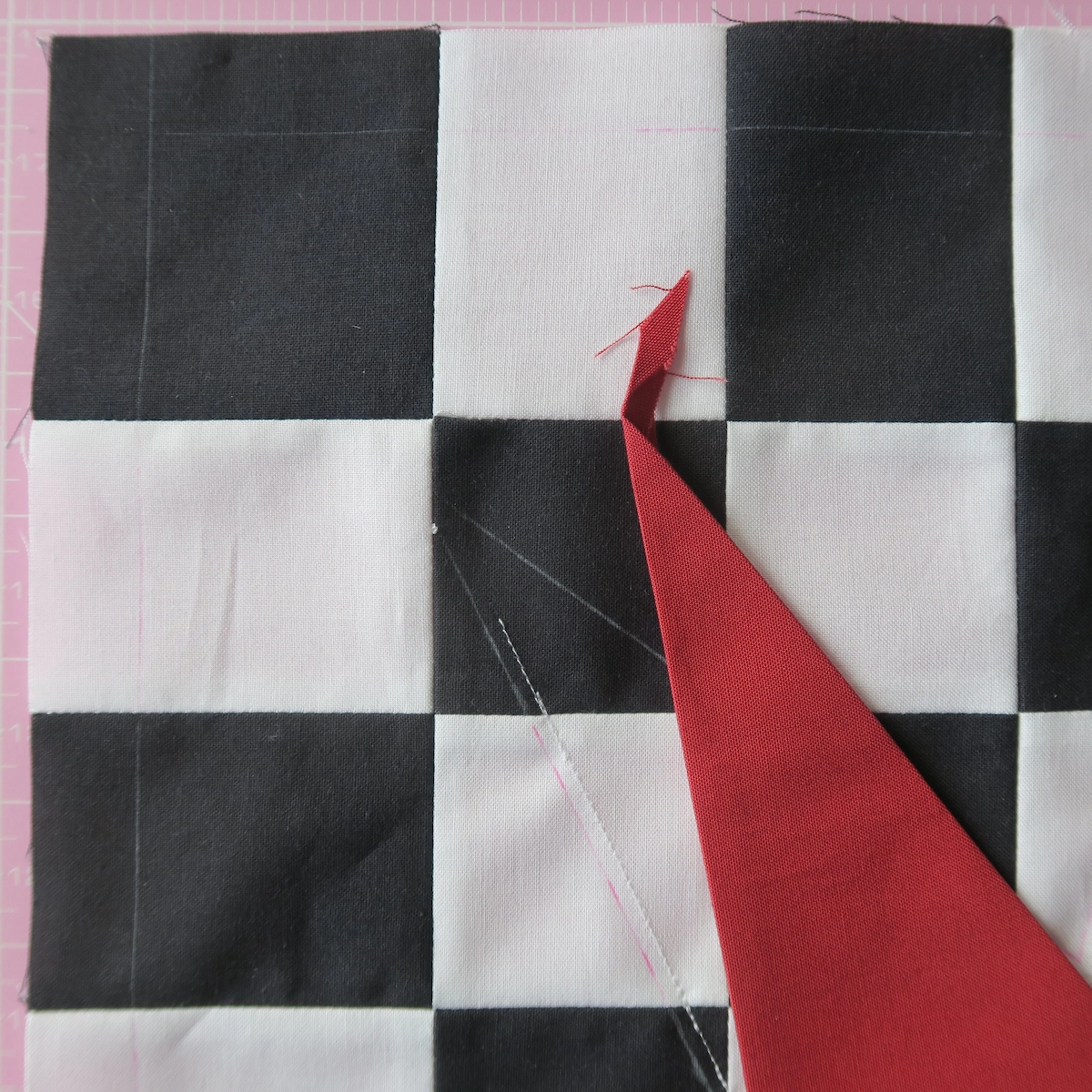
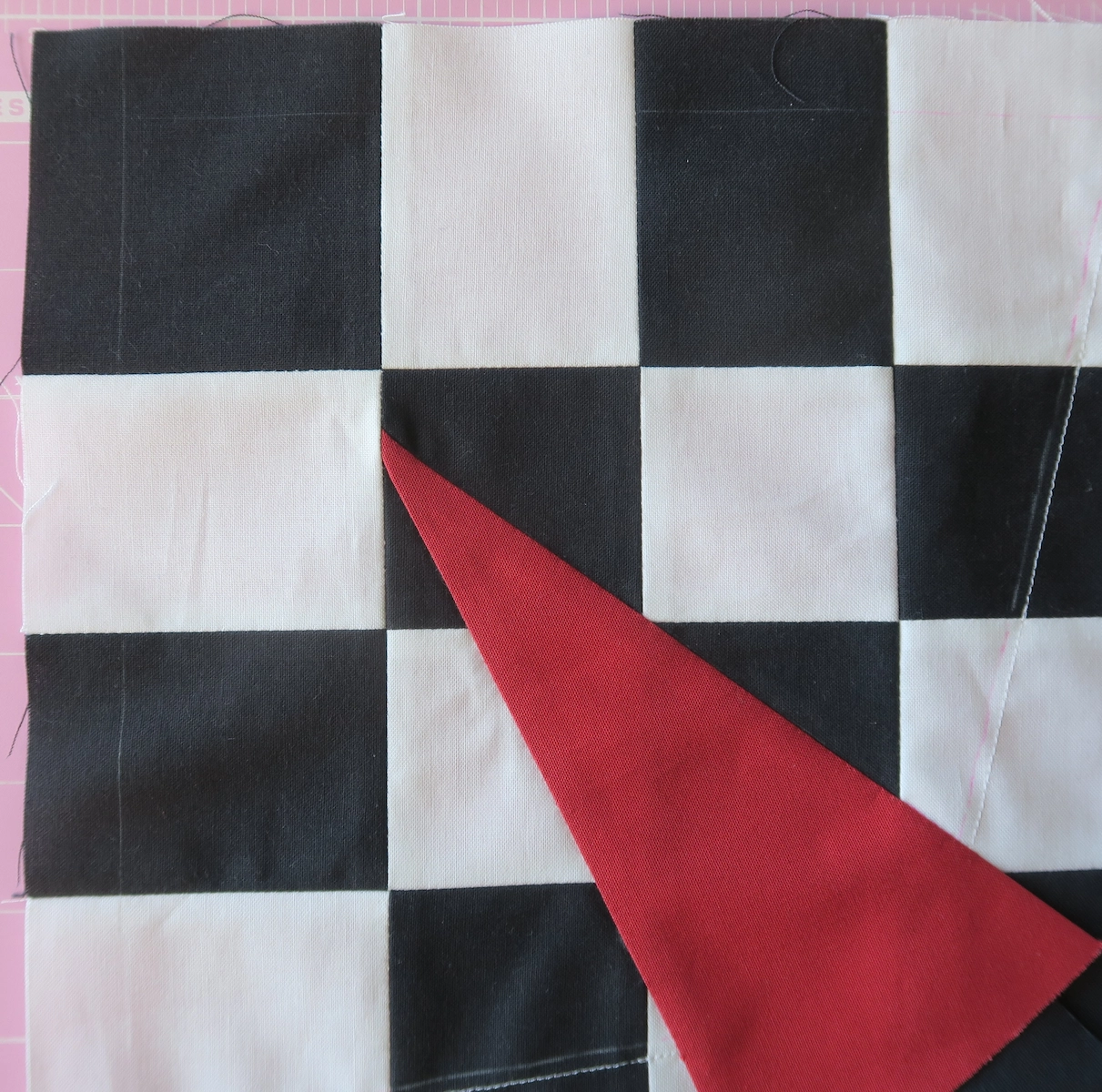
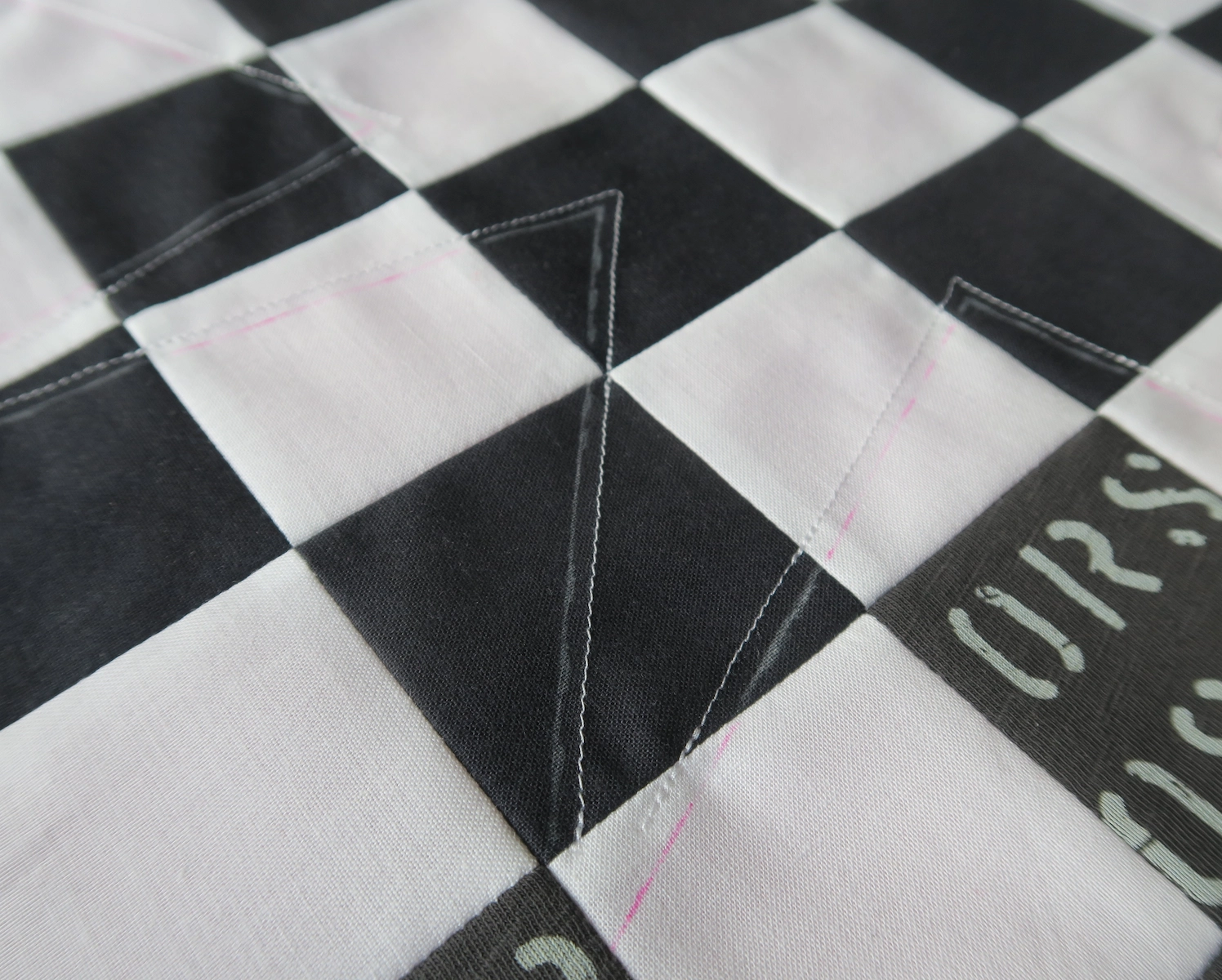
As it is not possible to get perfect points with a traditionnal hand appliqué method, I decided to insert the points either in the checkerboard background or along the edges of the quilt. Of course, I had to unstitch some parts of the background to insert the points along the appliqué step.
Comme ce n’est pas possible d’obtenir des pointes parfaites avec une méthode traditionnelle d’appliqué main, j’ai décidé d’insérer les pointes dans le fond damier ou le long des bords du quilt. J’ai dû bien sûr découdre quelques parties du fond pour insérer les pointes le long de l’étape d’appliqué.
Secured Seams
As I planned to remove the background underneath the appliqué pieces, I secured my seams using a short stitch on my sewing machine. I did this preparing step before starting the hand appliqué.
Comme j’avais prévu d’enlever le fond au-dessous des pièces appliquées, j’ai sécurisé mes coutures en utilisant un point court sur ma machine à coudre. J’ai réalisé cette étape de préparation avant de commencer à appliquer.

Appliqué in Progress
Here is what the quilt top looked like after stitching all red triangles and before adding the central piece.
Voici à quoi ressemblait le top après avoir appliqué tous les triangles rouges et avant l’ajout de la pièce centrale.
Backside
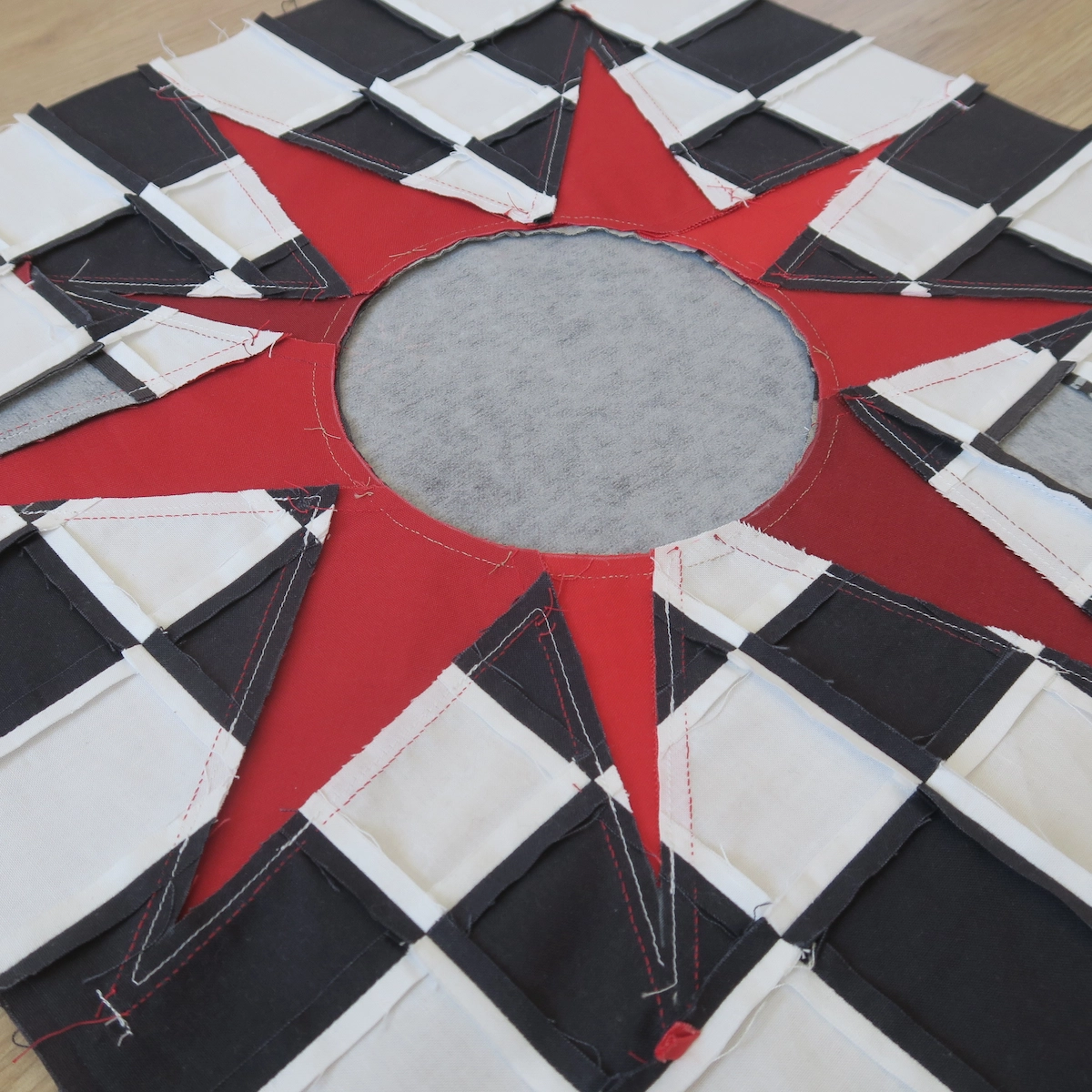
Here is a view of the backside of the finished quilt top, after all pieces, triangles and centre, have been appliqued and the background underneath removed.
Voici une vue du dos du top terminé, après que toutes les pièces, triangles et centre, aient été appliquées et le fond au-dessous évidé.
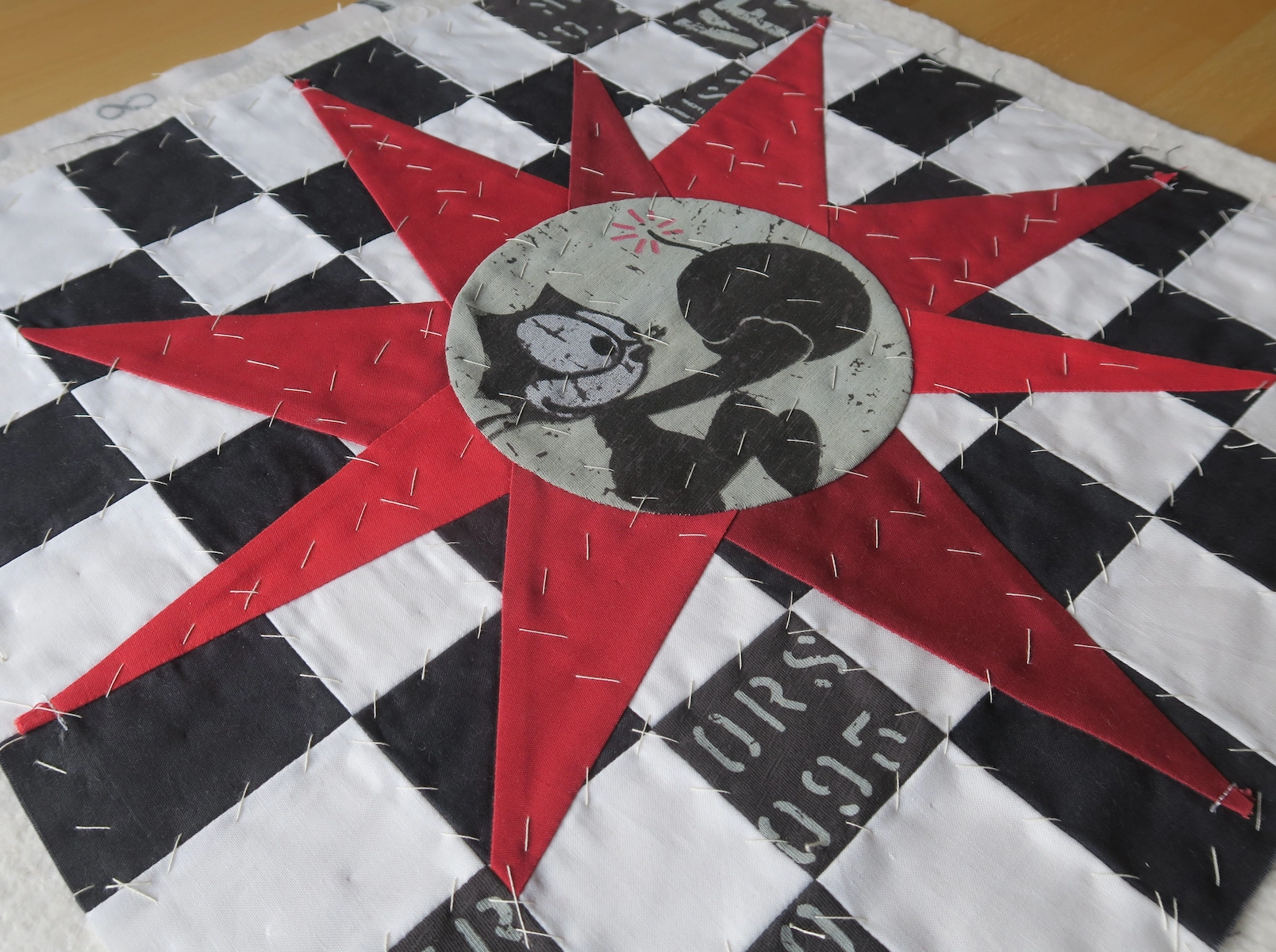
Quilt Top Basted
The next step is working on a quilting design, probably pretty light.
La prochaine étape est de travailler sur un dessin de quilting, probablement assez léger.